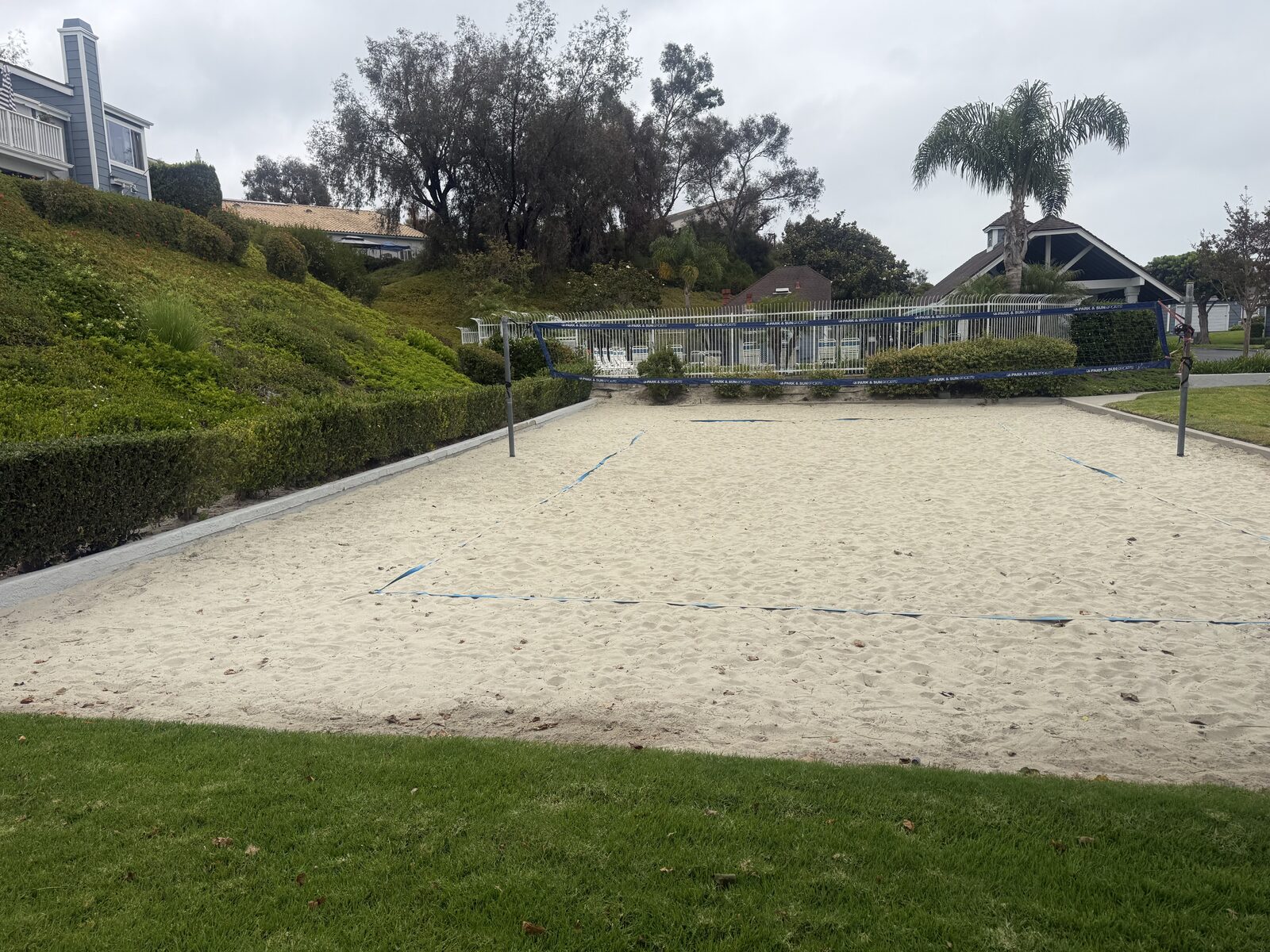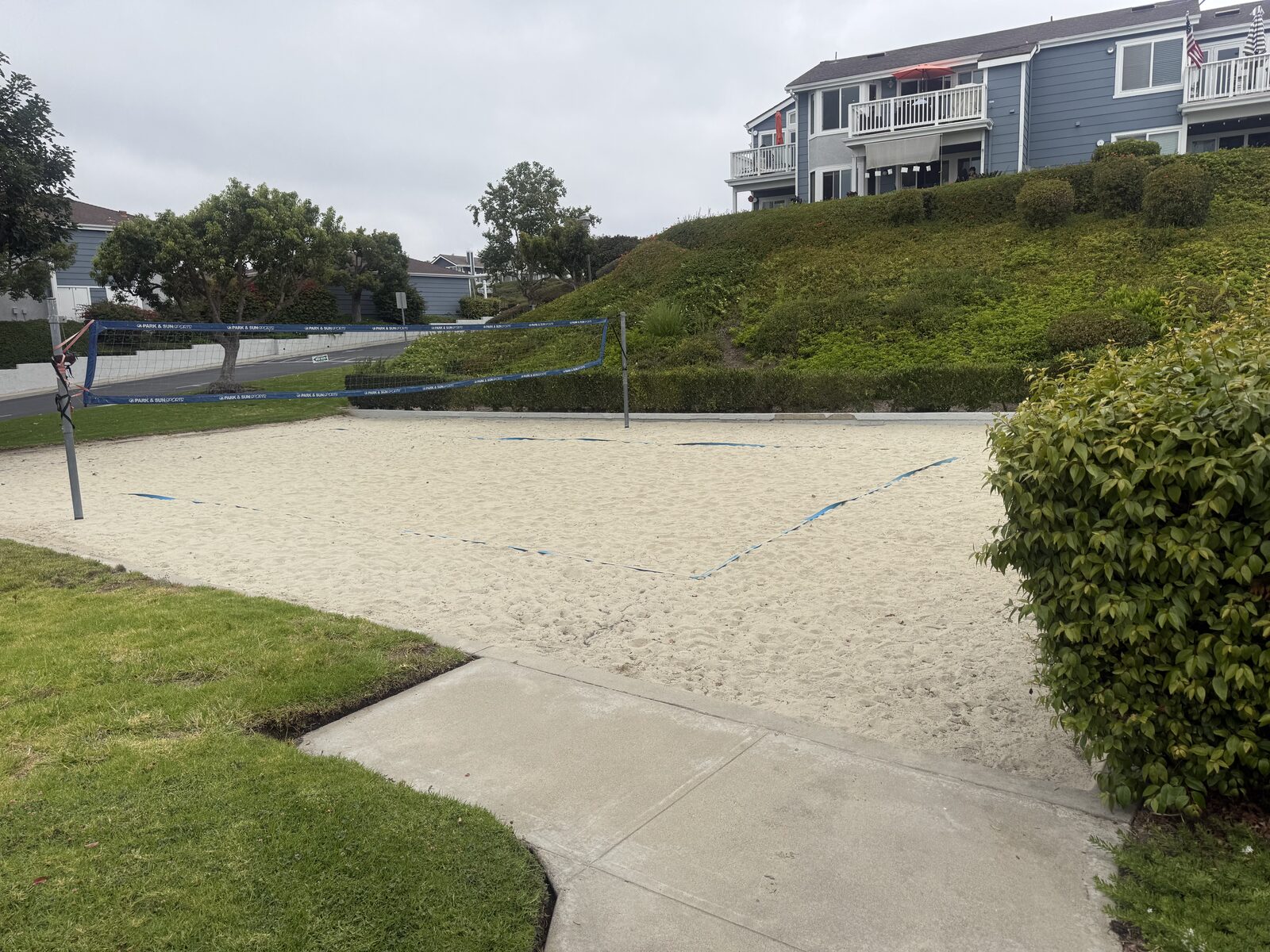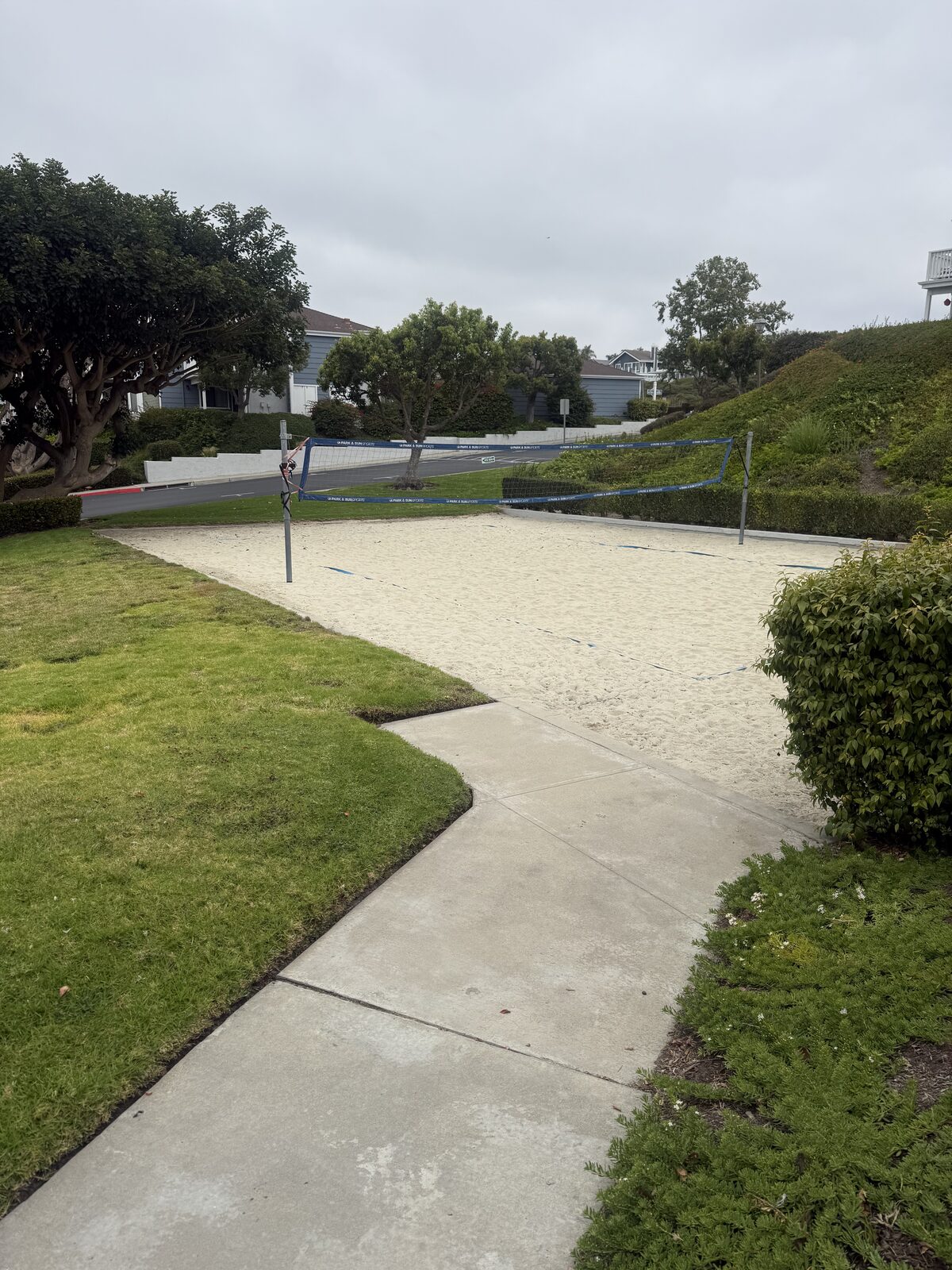
The community sand volleyball court, mostly empty, beside the pool
A Faire Harbour resident-led campaign Β· next to the community pool

Let's build the Faire Harbour Bark Park.

Our sand volleyball court sits quiet most of the week β€” this campaign is for the people who live here and the dogs. With a fence, a gate, and some wood chips, it becomes a safe, off-leash dog park for the whole community β€” reusing space we already own.

~4,000sq ft already cleared
$25–35kPhase 1 target
144homes served, all seasons
The idea in one minute

An underused court. A community full of dogs. An easy fix.

The volleyball court sees intermittent use relative to how many households here have dogs. Meanwhile, off-leash dogs already create friction on shared lawns and sidewalks, and the nearest public dog park is across town on Avenida La Pata β€” roughly a 12–15 minute drive. We can solve all three at once β€” by reusing a footprint we already own.

🏐

Barely used today

A single-sport court that sits idle most days, serving a narrow slice of residents.

πŸ•

Dogs need a home base

A safe, fenced, off-leash space keeps dogs β€” and the neighbors around them β€” happy and out of conflict.

♻️

Smart reuse

Keeping the sand as a drainage sub-base saves roughly $2,700–$7,800 versus hauling it out and importing fill.

The space today & the vision

Drag to see the transformation

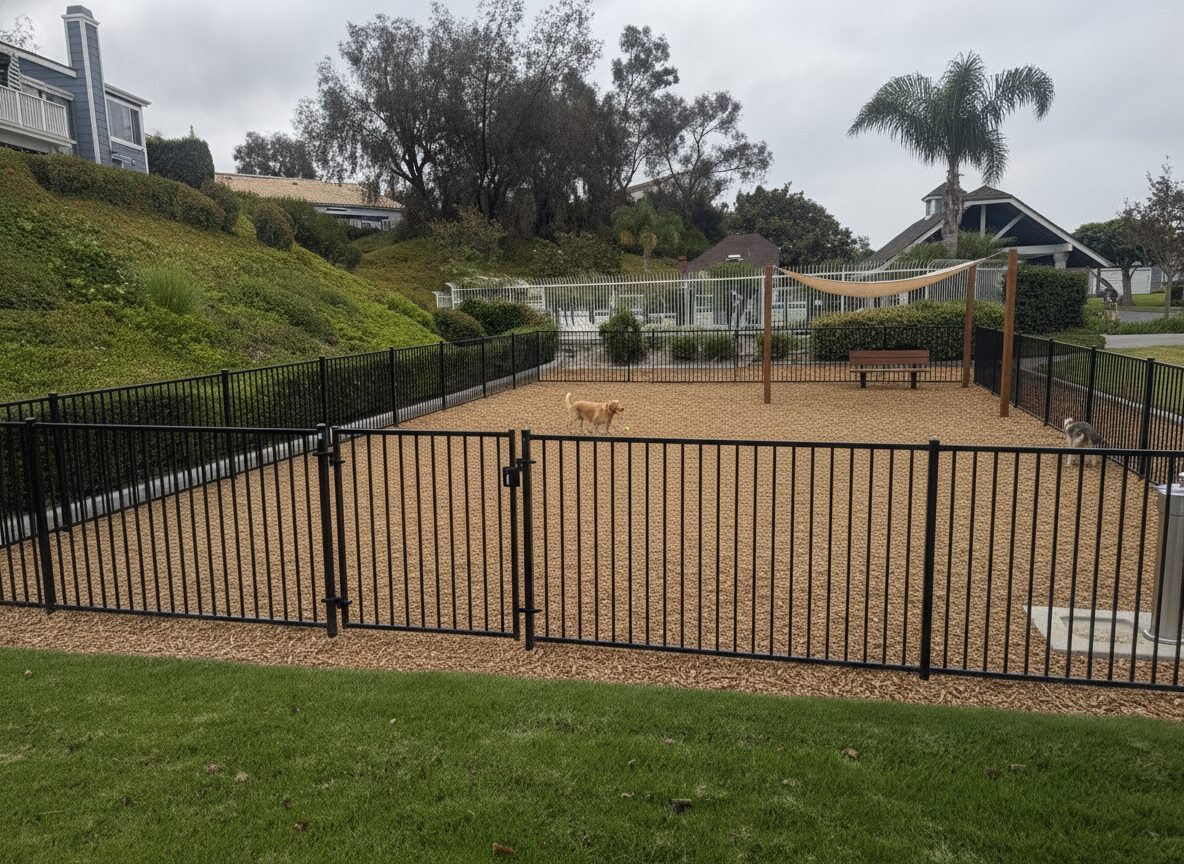
Left is our actual court today. Drag across to see the same spot as a Phase 1 dog park β€” same homes, same hillside, same pool behind it β€” with a fenced yard, wood-chip surface, shade, benches, water, and room to run.

Visualization of the dog park on the same court, homes and hillside unchanged Today
The sand volleyball court today
The Vision
⇆
πŸšͺ Sallyport (double-gate airlock) πŸ’§ Dog & human water πŸͺ΅ Wood-chip surface ⛱️ Shade sail + benches πŸ—‘οΈ Waste station

Vision images are AI-generated visualizations created from photos of the actual court β€” illustrative of Phase 1, not a final engineered design.

More of the vision

The same court, seen from the walkway and the lawn.

The site as it is now

Well-kept common area, framed by lawn and hedges, right beside the pool.

Recommended Phase 1 scope

A secure, usable park first β€” comfort & extras follow

Phase 1 delivers a fully functional dog park. Shade, a wash station, agility, and a small-dog split can be added later through sponsorships β€” so we never overbuild on day one.

1

Site prep & grade

Cleanup, 1–2% grade, retain the sand as sub-base, geotextile fabric.

2

Fence + gates

5-ft vinyl-coated chain link, dig barrier, a sallyport (double-gate airlock so no dog bolts through a single open gate), service gate, rules signage.

3

Surface

Engineered wood-chip surfacing (decomposed-granite alternate) with edge restraint.

4

Water

Dog/human combo fountain plus a lockable hose bib for cleaning.

5

Waste & comfort

Bag dispensers + covered trash, 2–3 benches, and a shade sail.

Deferred / optional: small-vs-large-dog split, artificial turf upgrade, dog-wash station, agility equipment, pavilion β€” great sponsorship targets for later.
The court that becomes the dog park

Indicative timeline

  • Board concept approval β€”  Meeting 1
  • Site verify: measure, 811 locate, water distance β€”  2–4 weeks
  • Fundraising & sponsorships β€”  parallel, 1–3 months
  • Contractor quotes (fence, grade, plumbing) β€”  3–6 weeks
  • Build Phase 1 β€”  2–4 weeks on site
  • Soft opening + rules education β€”  immediate
Project planning checklist

What it takes to get from vote to grand opening

🧭 Approve & verify

  • Board approves concept + documentation set
  • Appoint volunteer project lead + treasurer
  • Measure the court; call 811 utility locate
  • Confirm water line distance to the site
  • 15-min call with the HOA insurance broker
  • Adopt draft park rules & hours

πŸ’΅ Fund & bid

  • Launch community fundraising (thermometer)
  • Line up 2–3 named sponsorships
  • Open a grant tracker (deadlines, match)
  • Get 3 competitive fence/grade/plumbing bids
  • Set Phase 1A "not-to-exceed" with the board
  • Recruit in-kind labor & materials

πŸ”¨ Build & open

  • Site prep, grade, geotextile
  • Install fence, sallyport (double-gate airlock) & service gate
  • Spread wood-chip surface + edging
  • Set water, waste stations, benches, shade
  • Mount rules signage at the entry
  • Soft opening + stewardship rotation live
The stewardship case

This is asset reuse, not new spending

Take a low-use, single-sport court and redeploy it into one of the highest-frequency amenities a community can offer β€” at a fraction of the cost of building something new.

πŸ“ˆ

Marketability

Amenity-rich, pet-friendly communities compete better in resale and leasing. A dedicated dog park is a named feature that widens the buyer and renter pool.

πŸ›‘οΈ

Cost avoidance

Reusing the sand sub-base saves ~$2,700–$7,800. Concentrating dogs in a fenced, insured space reduces turf damage, complaints, and liability exposure.

πŸ”

Efficient reuse

Same footprint, same insurance envelope, dramatically wider benefit β€” used by owners, renters, and even non-dog-owners as a social space by the pool.

71% of U.S. households include a pet β€” NAR '25 1 in 5 buyers weigh pets when picking a neighborhood β€” NAR '24 71% of park agencies now run a dog park β€” NRPA '26 63% of renters search "pet-friendly" β€” NAA/Michelson +$57/mo renters would pay for on-site pet amenities β€” NMHC '24

Cost per household: the reframe

Large-sounding totals shrink fast when spread across the community and the amenity's useful life. The method:

Per-home annual cost = (Phase 1 cost βˆ’ funds raised) Γ· 144 homes Γ· 10-year life

Faire Harbour is 144 homes. Worst case β€” the association funds the entire $25,000 Phase 1 target with zero fundraising β€” that is $174 per home, once. Spread over a ten-year amenity life: about $17 per home per year β€” under $1.50 a month. And the plan is built so fundraising, sponsorships, and in-kind labor carry most of it, pushing the association’s share toward zero.

What this is β€” and isn't

We are not promising a guaranteed dollar bump to any single home's value. No one can honestly do that.

We are arguing improved desirability, real cost avoidance, and efficient reuse of an asset we already own β€” a conservative, defensible case.

Sources: NAR β€œAnimal House” / Fur Babies infographic (2025) Β· NAR 2024 Profile of Home Buyers & Sellers Β· NRPA 2026 Agency Performance Review (Fig. 3) Β· NAA citing the Michelson/HABRI Pet-Inclusive Housing Report Β· NMHC–Grace Hill 2024 Renter Preferences Survey.

Financials Β· baseline path

An honest, phased budget

Full line items live in the project cost sheet. This is the Phase 1 baseline: sand retained, chain-link fence + sallyport airlock, wood-chip surface, combo fountain, waste stations, benches, and shade.

BucketLowHigh
Site prep (recommended path)$2,050$6,100
Geotextile fabric$250$600
Fencing + sallyport airlock + service gate$6,950$15,200
Wood-chip surfacing$3,200$8,000
Water (fountain + hose bib)$3,100$9,500
Waste stations$890$2,500
Seating + shade sail$3,000$9,700
Year-1 bag ops$200$500
Contingency (10%)~$1,960~$5,210
Phase 1 planning total~$21,600~$57,300

How we'd pay for it

A blended funding stack keeps the burden off any single source:

Anchor HOA reserve / assessment 15–40% Community fundraising 10–30% Local sponsorships Upside Grants & contests βˆ’20–40% In-kind labor
Board ask: approve the concept, authorize a $25k–$35k Phase 1 fundraising target (not-to-exceed ~$55k if contractor-heavy), and green-light 2–3 competitive bids.

Phased build option

  • 1A β€” Secure & usable:  fence + surface + waste + basic water Β· ~$14k–$35k
  • 1B β€” Comfort:  fountain, benches, shade Β· +~$6k–$18k
  • 2 β€” Upgrade:  turf/DG, wash station, agility, trees Β· +$10k–$50k+
Renters β€” this is your campaign too

You don't have a vote. You have something better.

Owners cast the ballots, but they care about one thing renters influence directly: how desirable and rentable this community is. Every renter who speaks up makes the owners' case for them.

Ways to help β€” no vote required

  • Sign the demand petition. Two minutes, and it's the number the board scrutinizes.
  • Submit a short support letter. "I rent unit ___, I have a dog, I'd use this weekly" carries real weight.
  • Volunteer on build days. Sweat equity lowers cost and proves we'll maintain it.
  • Donate or sponsor a bench, water station, or bag dispenser.
  • Bring your landlord into the conversation β€” the highest-leverage move of all.

The "tell your landlord" play

Your landlord has a vote; you have their ear. A friendly note goes a long way:

Hi [Landlord] β€” as your tenant at [unit #]: the HOA is weighing turning the empty sand court by the pool into a fenced dog park. As a dog owner it would make me want to stay longer, and it makes the unit more appealing to future renters. When it comes to a board vote, I'd really appreciate your yes. Thanks for considering it!

🐾 Add yourself to the Demand Registry

Renters and owners alike β€” help us hand the board hard numbers.

Submits by opening a pre-filled email to the campaign organizer. Nothing is posted publicly.

Get involved

This only happens if neighbors show up

Most of it takes minutes. Pick a track and jump in β€” even one action moves us forward.

✍️

Sign & share

Add your name to the petition, then send it to two neighbors. Signatures are the fastest way to show the board this is wanted.

βœ‰οΈ

Write the board

A short letter of support carries more weight than a signature. Use our template β€” it takes five minutes.

🧀

Volunteer

Build days (fencing, chips, benches, signage) and a light weekly stewardship rotation once we're open.

πŸ’›

Sponsor or donate

Claim a named sponsorship or "buy a brick." Every dollar shrinks what the HOA has to cover.

πŸ“£

Spread the word

Neighbors, HOA forums, social groups. Renters count too β€” bring your landlord along.

πŸ§‘β€πŸ€β€πŸ§‘

Join the committee

Open roles: project lead, treasurer, grant tracker, events, stewardship coordinator. An hour a month helps.

β˜… Become a Founding Member. Everyone who signs, pledges, or volunteers before we break ground gets recognized on a permanent welcome-sign plaque at the park entrance.
Sponsorship menu

Put your name on the park

$5k–$10k
Founding Sponsor
Large entry plaque + naming in materials for 3 years
$2.5k–$5k
Water Station
Plaque at the fountain
$2k–$4k
Shade Sponsor
Sail / post plaque
$500–$1k
Waste Station
Small plaque + bag-restock credit
$400–$800
Bench
"In honor of…" plate
$25–$100
Buy a Brick
Your family or pet's name on the welcome path
Your action checklist

Short, doable, and each one counts

πŸ“… This week

  • Sign the resident support petition
  • Share the link with 2 neighbors
  • Bookmark this page for updates
  • If you rent, tell your landlord

πŸ—“οΈ This month

  • Submit a letter of support to the board
  • Attend / send comments to the next meeting
  • Recruit 3 neighbors to sign
  • Pledge, sponsor, or buy a brick
  • Consider a committee role

πŸ”¨ Build phase

  • Sign up for a build day
  • Offer a tool, truck, or snack run
  • Join the stewardship rotation
  • Come to the kickoff BBQ / park day
  • Share opening-day photos
Questions & objections

The honest answers

Won't dogs bark and disturb nearby homes?

Peak use is short visits (20–45 min), not all-day kennel noise. The double-gate entry reduces barrier-frustration barking, and posted hours align with HOA quiet times. Chronic nuisance dogs are a handler problem, managed with the same progressive enforcement as pool or gym rules. A dedicated park actually concentrates activity where it can be managed, versus informal off-leash use on lawns.

Will it smell like a kennel?

Odor comes from urine saturation + wet waste + poor drainage β€” not dogs themselves. Design mitigations: retained free-draining sand, 1–2% grade, geotextile, chip surface, covered trash, and a scoop policy. Weekly bin service plus quarterly enzyme treatment (~$50–$400/cycle) keeps it in check. Natural grass is actually worse for odor under heavy traffic β€” which is why we don't recommend it.

Who's liable if a dog bites someone?

Clear posted rules: owners are responsible for their dogs, enter at own risk, vaccinations recommended, no aggressive dogs. The double-gate airlock reduces escape incidents. Before opening, we confirm coverage with the HOA's insurance broker and adopt a rules-acknowledgment approach β€” the same way communities treat pools and playgrounds. It's a 15-minute broker call, not a reason for paralysis.

Won't this become a maintenance burden?

Year-1 bag/liner ops run ~$200–$500; chip refresh ~$800–$2,000/yr depending on traffic β€” much of it coverable by sponsorships. A light volunteer stewardship rotation handles weekly tidying, with monthly gate checks and quarterly enzyme treatment. It's a defined, budgeted routine, not an open-ended blight.

Nobody uses the volleyball court β€” why spend money on it?

Low volleyball use is exactly the reason to convert. Capital moves to an amenity with broader, more frequent demand. The phased build means we don't overbuild on day one β€” Phase 1A alone gives us a secure, usable park.

What about residents without dogs?

Non-dog owners benefit from fewer dogs running loose on shared lawns and sidewalks, plus community-wide gains in desirability and neighbor social capital. And the funding mix emphasizes fundraising and sponsorships, not just a blanket assessment β€” the board chooses the mix.

Will it attract outsiders?

Post "Residents and accompanied guests only" signage at the sallyport entry, with hours and rules. If any abuse appears, a simple fob/key access policy can be added later β€” not required for Phase 1.

Are small dogs safe with big dogs?

Phase 1 is a single yard given the 4,000 sq ft footprint. Rules require supervision, allow temporary leashing, and ask handlers to leave if play isn't safe. An optional Phase 2 divider (~$1,500–$4,000) can follow if usage data supports it.

Add your voice

Sign the petition. Send a letter. Make it happen.

The board needs to see real demand before committing dollars. Two minutes here is the most useful thing you can do today.

✍️ Sign the support petition

Opens a pre-filled email to the campaign organizer to record your support.

βœ‰οΈ Send a letter of support to the board

Personalize and send β€” a short letter carries real weight in the record.

Open in email

Set the board's email address in main.js (CONFIG.boardEmail) to enable one-click send.